






Resources

Amazing Role Models

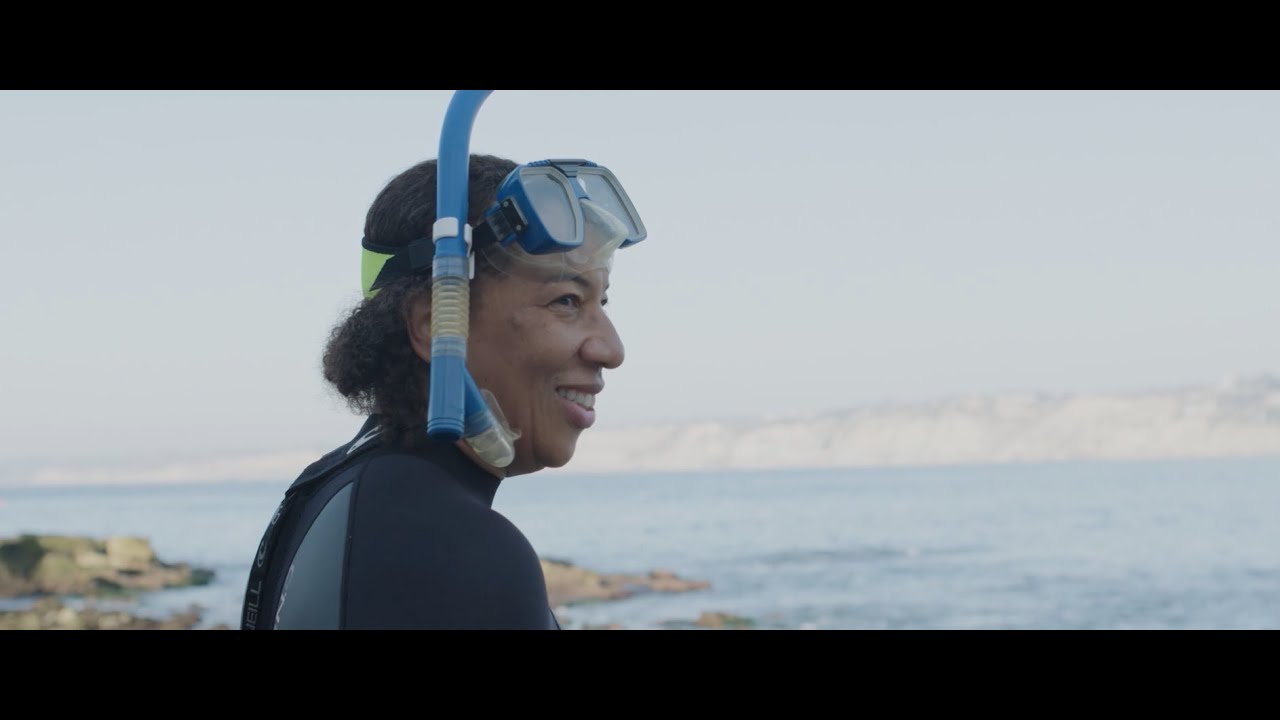
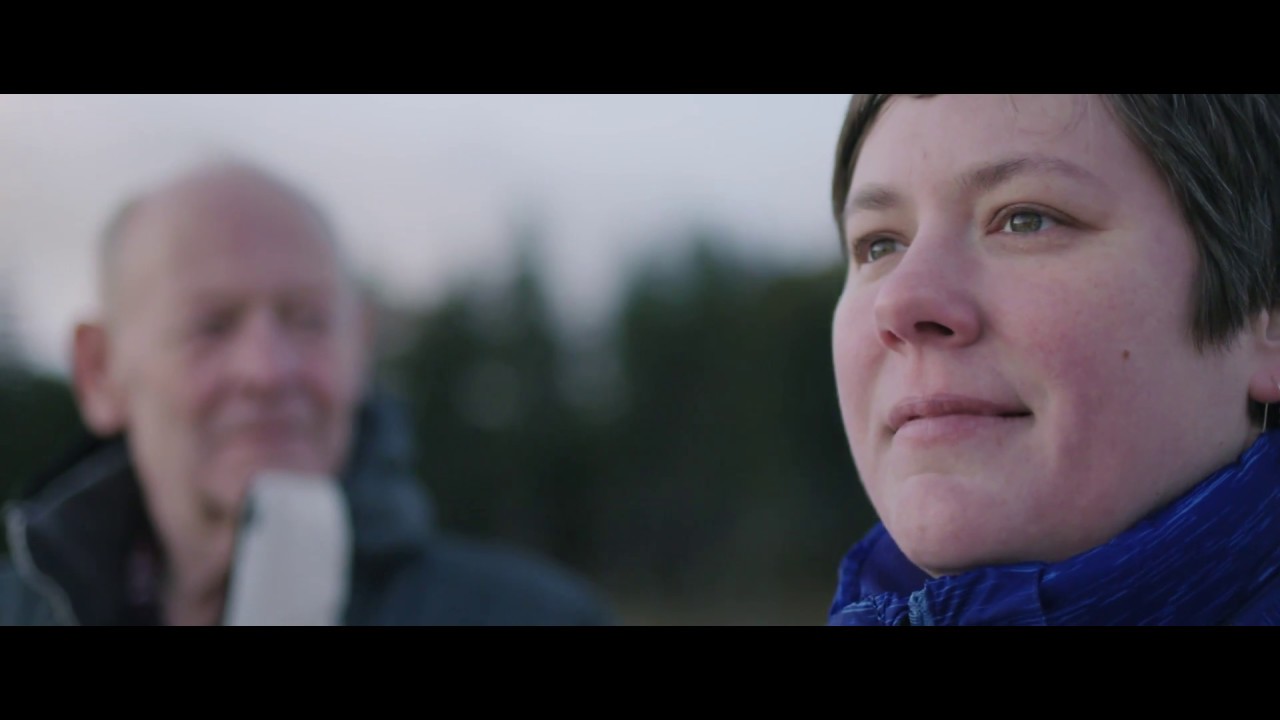
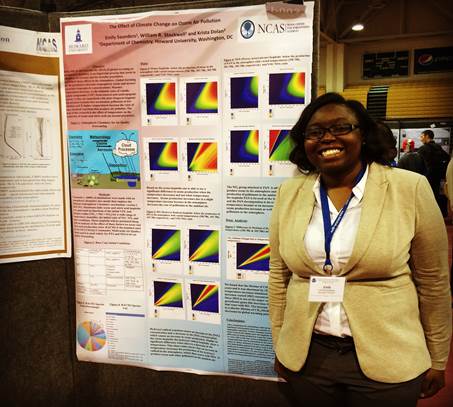
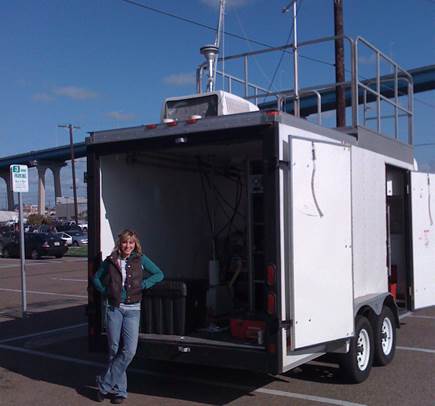
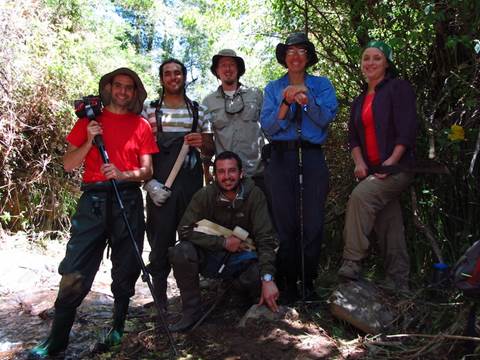
Watch one or more of these inspirational videos of women in the geosciences and learn how they are using their science & their humanity to make the world a better place. Have a great video to suggest? Please send us an email so we can share it with others

Inspirational Geoscientists

8 Videos
It Takes a Village

There are many grassroots organizations that are working to make the STEM community a more welcoming place for all. Follow them on social media and/or go to their websites to find out what they are up to, get notified of jobs and professional development opportunities, and find community.

The mission of 500 Women Scientists is to serve society by making science open, inclusive, and accessible and transform society by fighting racism, patriarchy, and oppressive societal norms.

500womenscientists.org/

500 Queer Scientists is a visibility campaign for LGBTQ+ people and their allies working in STEM and STEM-supporting jobs — a group that collectively represents a powerful force of scientific progress and discovery.

500queerscientists.com

Embracing, Empowering and Inspiring Latinas in Earth and Planetary Sciences.

geolatinas.weebly.com

Black in Environment’s mission is to build community for Black people in environmental spaces and highlight the scholarship, activist and engagement of Black environmentalists globally. Black in Environment exists to (1) Increase visibility of Black environmentalists, (2) Build community, (3) Impart positive change across the globe. Black in Environment aims to counter the false narrative that Black people do not care about the environment by highlighting multigenerational Black people in the environmental movement. 

https://www.blackinenviron.org/mission

Unlearning Racism in Geoscience is working to (1) deepen the community’s knowledge of the effects of racism on the participation and retention of Black, Brown, and Indigenous people in Geoscience, (2) draw on existing literature, expert opinions, and personal experiences to develop anti-racist policies and strategies, and (3) share, discuss, and modify anti-racist policies and strategies within a dynamic community network and on a national stage.

urgeoscience.org

The Earth Science Women’s Network is a grassroots, non-profit, member driven organization. Our mission is to build a resilient community that lifts all scientists and moves the geosciences forward.

eswnonline.org

The National Association of Black Geoscientists, a 501(c)(3) non-profit, was founded in 1981 with the purpose of building community – enabling Black Geoscientists to connect, communicate, and network with other minority professionals. 

Since then, the organization has evolved into a hub that attracts geoscientists from diverse fields, offering them opportunities to partake in career and educational endeavors, present cutting-edge research, build connections, advance professionally, and provide mentorship to aspiring Black Geoscientists.

https://www.nabg-us.org/


GEMS provides mentorship support for undergraduate and early-stage graduate students in the geosciences. GEMS believes that all students wishing to pursue an advanced degree should have access to resources and support. 

In order to address existing mentorship gaps, particularly for students from historically excluded groups in the geosciences and academia, GEMS matches students with faculty, postdoctoral, research staff and graduate student mentors. In addition, GEMS hopes to provide materials, webinars, and Q&A sessions on how to apply to graduate school.

GEMS aims to increase the accessibility of graduate programs and funding for all students, which they recognize is only one component of a larger effort needed to diversify the geosciences.

GEMS is sponsored by the National Association of Geoscience Teachers, NAGT.

https://gems-program.org/

Network to Expand your Community!

Undergraduate Research Opportunity Examples

So you’re interested in undergraduate research opportunities?

Fantastic!

  1. Many opportunities may be available at your home institution – definitely check out professors’ websites to see if anything piques your interest! if so, reach out!
  2. Research Experience for Undergraduates (REU) programs sponsored by the National Science Foundation. These NSF-sponsored programs typically run for 8-10 weeks are for U.S. citizens at universities, all over the US, in nearly every scientific discipline.
  3. Summer research opportunities at universities and/or with research scientists are often posted on discipline specific listservs – you can either subscribe or go to the website & browse listings.
  4. Many federal laboratories and private-sector companies offer summer research opportunities as well.
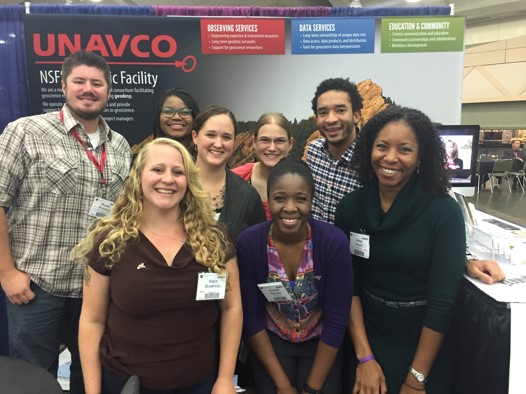
Aisha Morris at the UNAVCO booth with 2014 and 2015 RESESS interns during the GSA meeting in Baltimore. October 2015
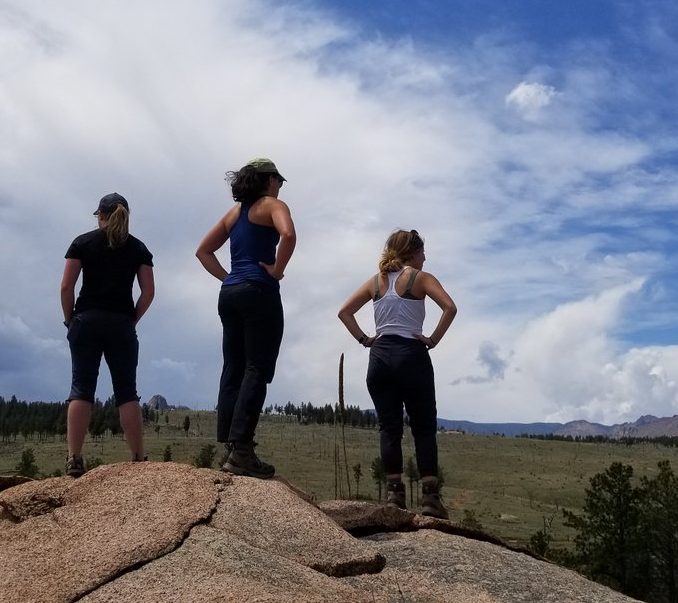
Taking a break after reaching their field site, undergraduate researchers look out over a 20 year old burn scar

The WHY & HOW behind applying to undergraduate research opportunities: 

Dr. Melissa Burt, director of an REU (Research Experience for Undergraduates) program at Colorado State University and a PROGRESS team member, led a webinar how to apply for REU programs. In this webinar we discussed the types of research opportunities available to students, what to expect during a summer research experience, and how to put together a strong and convincing application package. We shared information about a range of different programs across the country and had time to answer any questions.

Need help on your resume? Dr. Manda Adams (National Science Foundation) provides information about how to build your resume to best sell yourself & tailor it for each opportunity.

Additional Advice

REU participant slots can be highly desirable and sometimes extremely competitive; each hosting organization or school has only a limited number of available positions. These applications should be taken seriously. Jonathan Hodge at Grand Valley State University in Michigan has created  a list of excellent tips for attaining an REU:

REU and Summer Research Opportunities

Below is a listing of typical REU (Research Experience for Undergraduates) and summer programs that are regularly offered, but the actual offerings vary from year to year depending on NSF funding (COVID-19, etc.). Be sure to read each listing carefully for eligibility, application guidelines, & deadlines. Please note that the lists are not complete, but they can provide you a good place to start, you should also check out the National Science Foundation (NSF) REU website regularly for updates.

  • STEMUndergrads.science.gov
  • Argonne National Lab
  • Department of Energy Science
  • Undergraduate Laboratory Internships (SULI)
  • Department of Energy Scholarships and Internships
  • Geological Society of America
    Incorporated Research Institutions for Seismology (IRIS)
  • Los Alamos National Lab
  • Lunar and Planetary Institute (LPI)
  • Summer Intern Program in Planetary Science
  • National Aeronautics and Space Administration and NASA Internships
  • National Center for Atmospheric Research
  • National Ecological Observatory Network (NEON)
  • National Park Service GeoScientists-in-the-Park program
  • National Oceanic and Atmospheric Administration
  • National Renewable Energy Lab
  • National Science Foundation (NSF) REU
  • National Weather Center REU
  • Oak Ridge Science Semester
  • ORISE: Oak Ridge Institute for Science and Education
  • Pacific Northwest National Lab
  • Research Experiences in Solid Earth Sciences for Students (RESESS) by UNAVCO
  • Scripps Undergraduate Research Fellowship (SURF)
  • Sandia National Lab
  • Sierra Club Internship Opportunities
  • State Water Resources Research
  • Institute Program
  • US Geological Survey

This is really just the beginning! Find more opportunities with federal agencies at both Science.gov and USA Jobs.

To separate full-time positions from temporary research opportunities, be sure to search for student internships.

  • Chevron
  • Smithsonian
  • Vaisala
  • Encana
  • Geoscience Internships via the SimplyHired job search engine
  • Geology internships via InternMatch search engine
  • Schlumberger
  • American Geosciences Institute (AGI) Scholarship Programs
  • American Meteorological Society (AMS)
  • The Geological Society of America (GSA)
  • American Geophysical Union (AGU)

Check out some of these summer research programs:

  • Institute for Broadening Participation (IBP)
  • National Museum of Natural History, Smithsonian Institution Research Training Program
  • The Student Conservation Association
  • UNAVCO Geo-Launchpad: Internship for Community College Students in Colorado

Undergraduate research opportunities are often listed by universities and sometimes include links to opportunities beyond the university. Here are a few examples:

  • Caltech’s Summer Undergraduate Research Fellowship (SURF)
  • Colorado State University, REU Site in Climate Science
  • Colorado State University CHILL Radar Facility
  • Columbia University, Lamont-Doherty Earth Observatory Summer internships in Earth and Ocean Sciences
  • Duke Marine Sciences REU
  • Hobart and William Smith Colleges
  • North Carolina State University
  • Northwestern University
  • Penn State REU in Climate Science
  • Rice University, Earth Sciences
  • Stanford University
  • Texas A&M Atmospheric Science in the Gulf Coast Region
  • University of Colorado Institute of Arctic and Alpine Research (INSTAAR)
  • University of Michigan
  • University of North Carolina Chapel Hill
  • University of North Carolina – Charlotte
  • University of Oklahoma/National Weather Center REU
  • University of South Carolina – Space Grant
  • University of South Carolina has a great searchable database for opportunities all over the U.S. and abroad.
  • Williams College

Network to Expand your Community!

Most professional organizations offer substantially discounted membership dues and meeting fees for students (some continue these discounted rates for several years post graduation). Membership is a great investment for your long-term career.

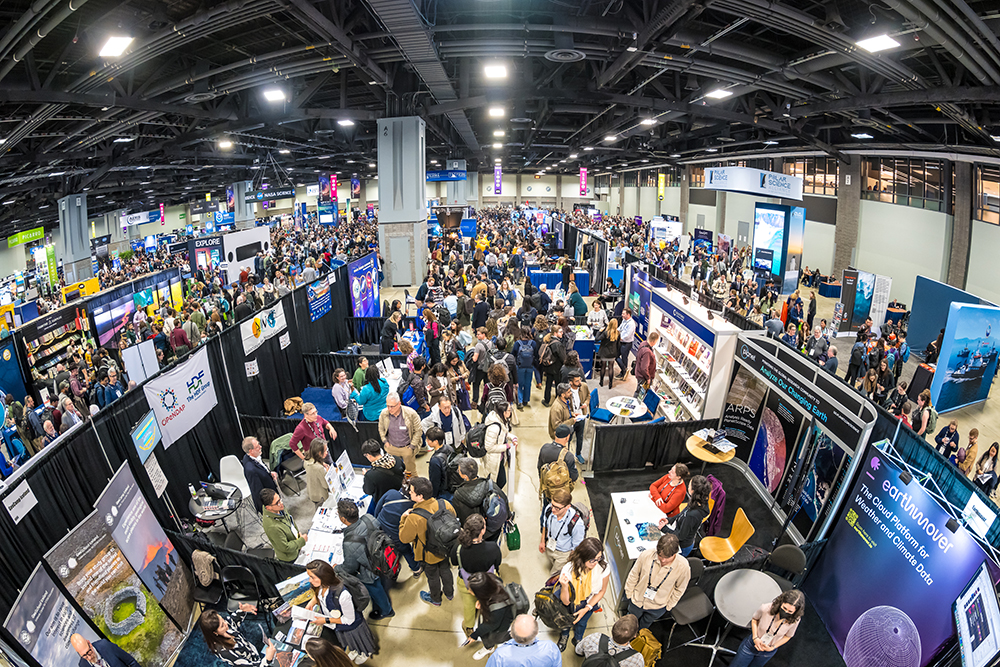
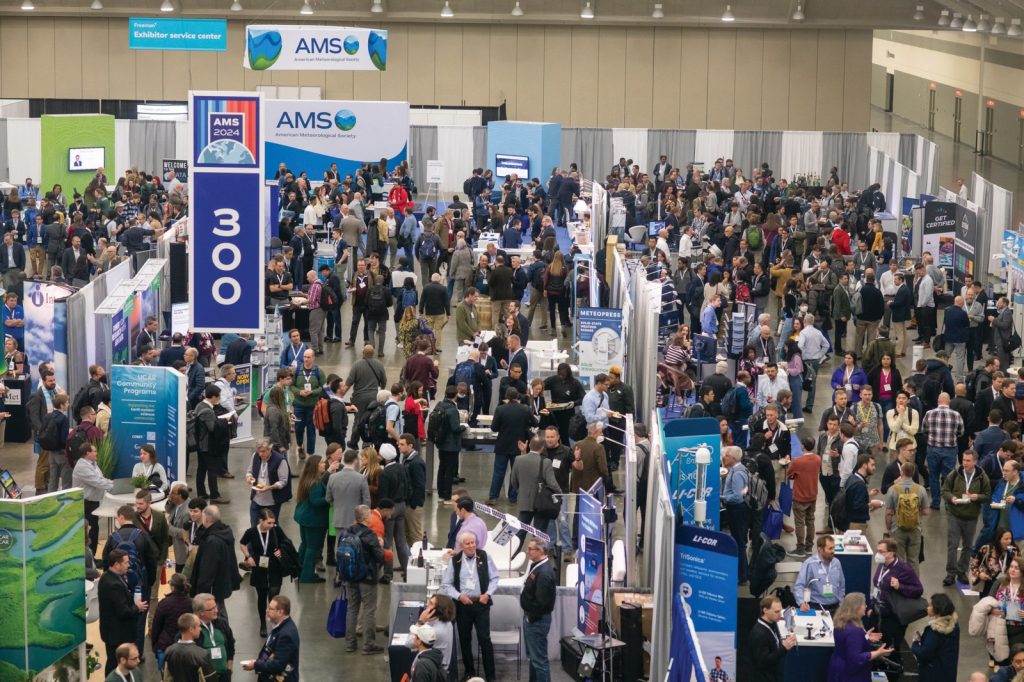
2013 American Geophysical Union (AGU) Joint Assembly Meeting exhibit hall

Discipline Focused Scientific Societies

Participating in local, national, and international networks, despite potential negative connotations, offers valuable connections with colleagues, peers, mentors, and friends. These networks expand your exposure to diverse research and grant opportunities, including those tailored for undergraduates.

Explore Wikipedia for geoscience organizations by specialty and our list of inspiring organizations dedicated to fostering inclusivity in the geosciences and STEM. After all, It Takes a Village.
 
Federal Laboratories & Agencies:

To separate full-time positions from temporary research opportunities, be sure to search for student internships.

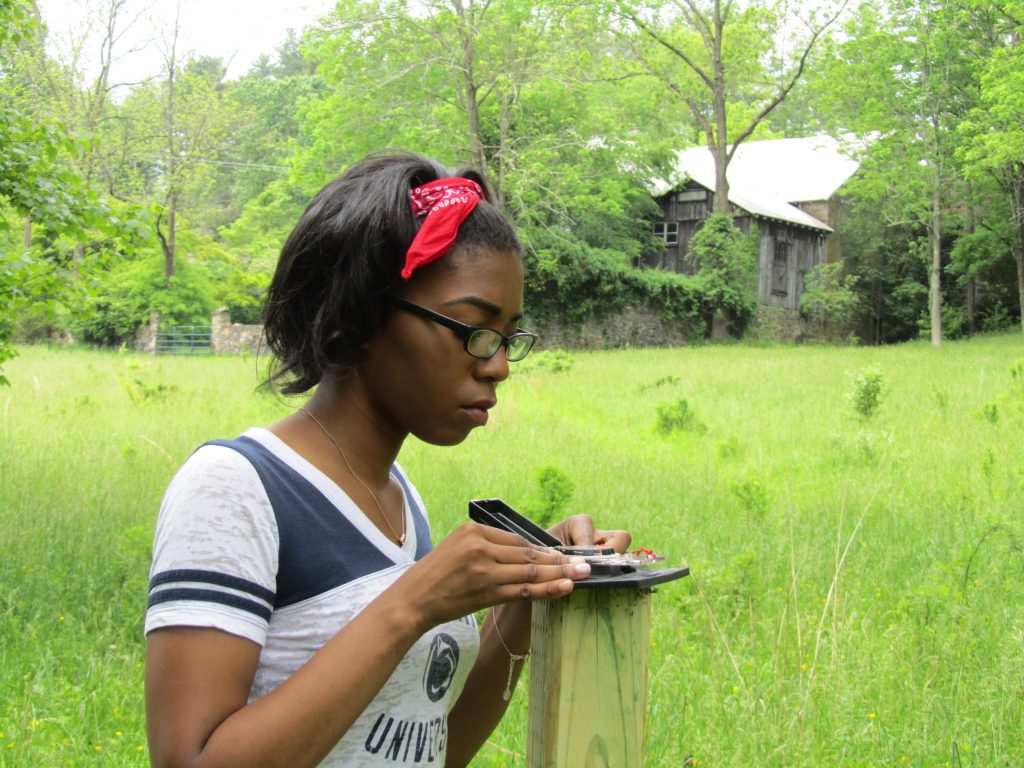
Kimmie Bowen checks on a field instrument as part of a research project at Penn State University
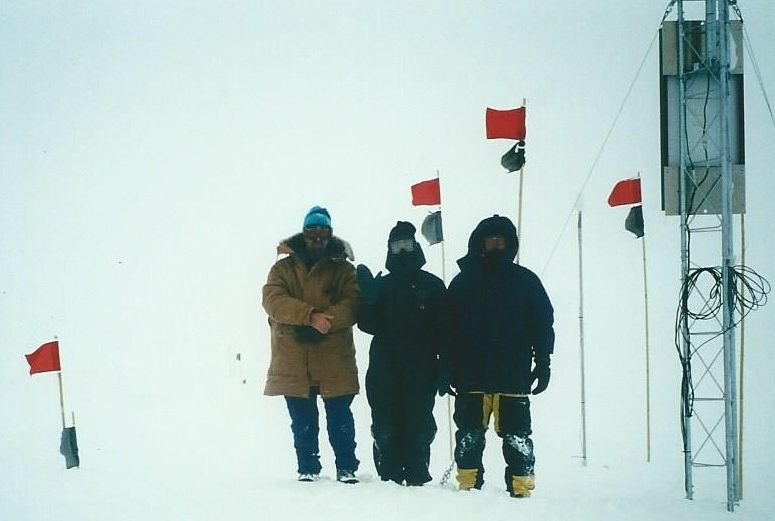
REU participant Elaine Godfrey (center) and teammates at the top of the Greenland ice cap after successfully repairing a magnetometer

You can also search by discipline:

  • NSF REU page list for the Astronomical Sciences
  • NSF REU page list for the Atmospheric Sciences
  • Hollings undergraduate scholarship program for NOAA labs
  • University of Oklahoma/National Weather Center REU in meteorology
  • SOARS at the National Center for Atmospheric Research
  • National Center for Atmospheric Research, Computational and Information Systems Laboratory
  • National Center for Atmospheric Research, Software engineering for data science (Unidata Program)
  • Texas A&M Atmospheric Science in the Gulf Coast Region
  • Penn State REU in Climate Science
  • NSF REU page, search for ‘geophysics’
  • Applied Research in Earth Sciences
  • NSF REU page list for the Earth Sciences
  • Keck Geology consortium summer projects
  • Geocorps
  • Research Experiences in Solid Earth Sciences for Students (RESESS) by UNAVCO
  • Geology Field Camps–listings from all over the world
  • NSF REU page list for the ocean sciences
  • Woods Hole Oceanographic Institution student fellowship program
  • Hollings undergraduate scholarship program for NOAA labs
  • NOAA Chesapeake Bay Summer Internships
  • Virginia Institute of Marine Science
  • American Association for the Advancement of Science (AAAS)
  • Keck Geology consortium summer projects
  • STEM Diversity Programs
  • Research Experiences in Solid Earth Sciences for Students (RESESS) by UNAVCO
  • National Science Foundation Human Resource Development
  • Louis Stokes Alliance for Minority Participation (LSAMP):
  • University of Michigan
Astronomy


Tips for Attaining an REU

Read and follow directions…

  • The application form will ask for specific information from you. Make sure to provide exactly what is requested. If you have questions about any part of the application, contact the program director and ask for clarification.

Demonstrate specific knowledge and interest in the program to which you are applying…

  • Don’t just say that you’re interested in doing an REU. Tell the reader exactly why you are interested in the specific REU to which you are applying. Do your research before you complete your application. Browse the program’s web site, and use this knowledge to highlight specific aspects of the program that are particularly appealing to you. Don’t use the same application essay for every program you apply to. Show the reader that you spent some time researching and applying specifically to their REU.

Demonstrate specific knowledge and interest in the program to which you are applying…

  • Don’t just say that you’re interested in doing an REU. Tell the reader exactly why you are interested in the specific REU to which you are applying. Do your research before you complete your application. Browse the program’s web site, and use this knowledge to highlight specific aspects of the program that are particularly appealing to you. Don’t use the same application essay for every program you apply to. Show the reader that you spent some time researching and applying specifically to their REU.

Choose good references…

  • What your references write about you can make a big difference in distinguishing your application from others. Choose references who know you well and who will take the time to write a thorough and detailed letter of recommendation. It’s okay to ask a reference, “Do you think that you will be able to write a strong and detailed letter for me?” Make sure your references understand what is expected of them. Some REUs provide detailed instructions for references; if such instructions are available, make sure that your references have a copy of them. Also give your references a copy of your application essay and any other information that would help them to write a strong letter for you.

Share what makes you different from other applicants…

  • Summer programs such as REUs are highly competitive. It is not unusual for a program with 8-10 participants to receive 100-200 applications. If you have unique experiences that set you apart from other applicants, make sure to mention these. What you write needs to convince the reader that you have unique traits and abilities that will contribute to your success in an REU. Of course, your academic preparation is important, but it is also important to demonstrate that you have the social and emotional maturity to function well in an intense research environment, working with people from all different backgrounds. Extracurricular and co-curricular activities often speak well to these characteristics.

Be authentic…

  • Don’t oversell yourself. Provide an honest account of your background and experiences, but don’t be boastful or arrogant. Don’t name-drop or use obscure mathematical terms to try to impress the readers.

Apply to multiple programs…

  • It’s important to remember that REUs are extremely competitive, and even the very best students do not get accepted by every program to which they apply. Do some research, and choose a variety of programs (perhaps 3-10) that suit your interests and abilities.