FACILITATING A PROGRESS WORKSHOP
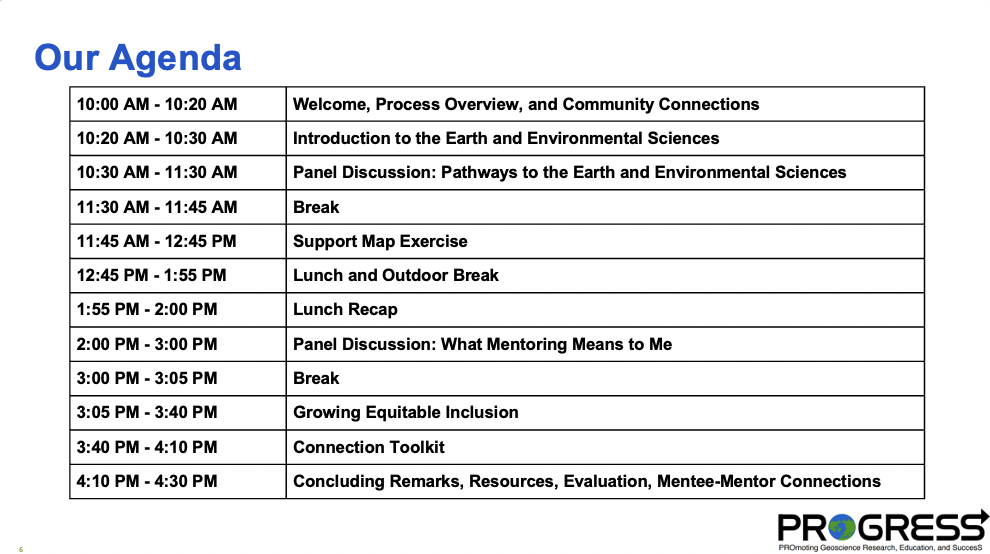
10:00 am - Welcome, Process Overview, and Community Connections
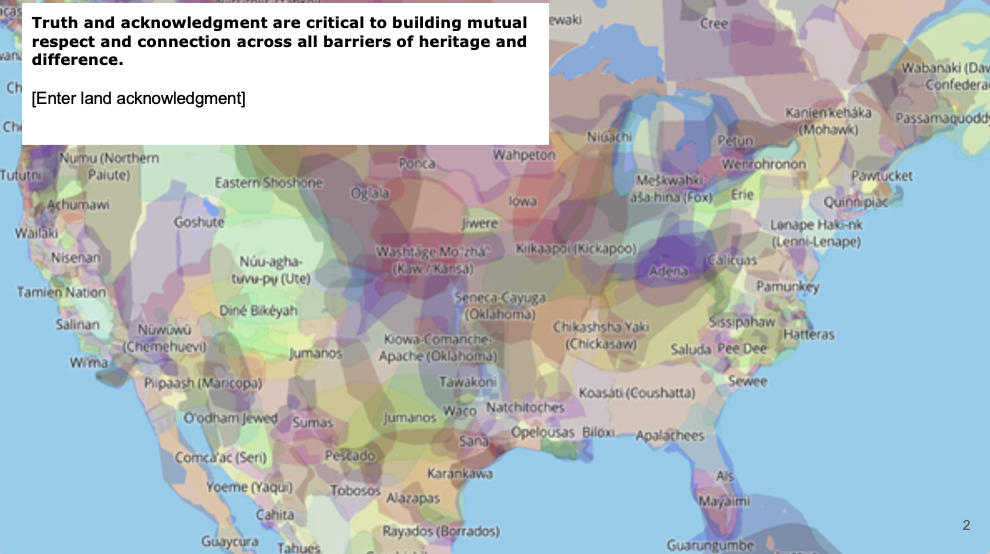
Review workshop logistics – The day’s expectations.
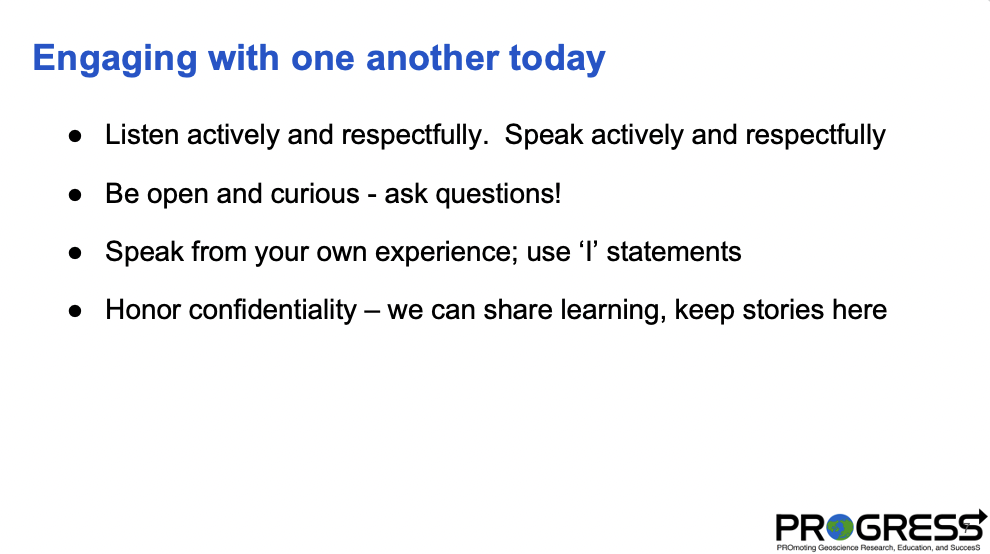
Promote norms of engagement with the workshop content, speakers/panelists, and one another.
Convey norms/expectations of diverse voices and experiences, kindness and respect for one another, commitment to confidentiality (stories stay in this space, lessons leave with you)
10:20 am - Introduction to the Earth and Environmental Sciences
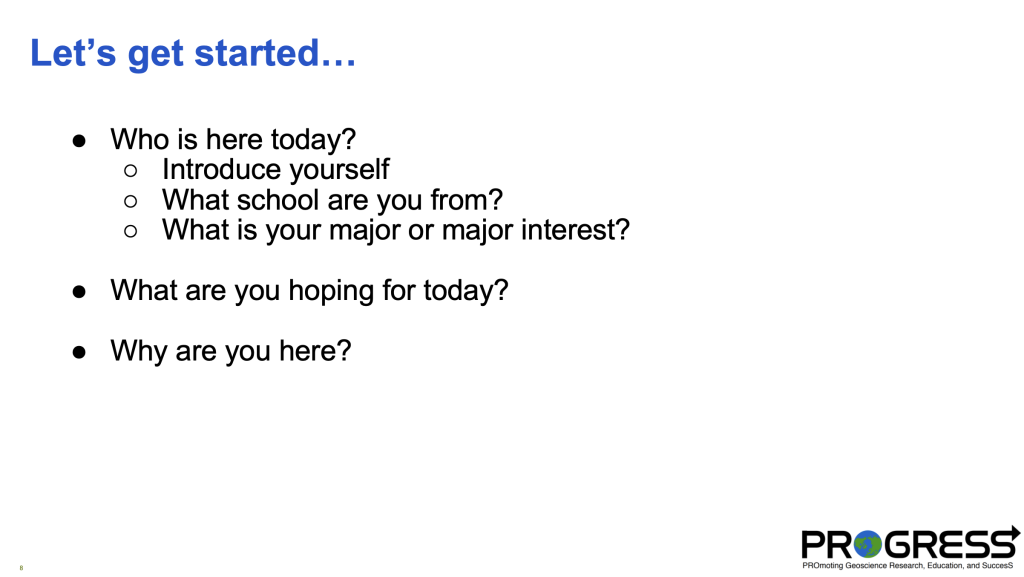
Highlight the Societal Relevance of Earth & Environmental Sciences
Showcase the diverse careers and work within the field.
Emphasize how this work improves lives, serves communities, and advances communal goals — perceptions linked to greater motivation and persistence in STEM among women and historically underrepresented groups.
Foster broad, inclusive expectations of who belongs in Earth/Environmental Sciences and what the work values — reducing stereotypes, strengthening belonging, and supporting persistence in STEM pathways.
10:30 am - Panel Discussion: Pathways to the Earth and Environmental Sciences
Career Role Model Panel
- Expose students to diverse women across career stages and fields in Earth/Environmental Sciences who have overcome challenges to achieve success
- Panelists share personal career stories that:
- Connect their journey to students’ own academic experiences
- Normalize struggles while highlighting the attitudes and behaviors that led to success
- Convey that success is attainable
- Role models are most inspiring when they are relatable, demonstrate competence, map a pathway to success, and model how to overcome challenges
- Diverse, inclusive portrayals reduce stereotypes, strengthen belonging, and increase motivation and persistence — particularly when they emphasize growth through effort
11:30 am - Break
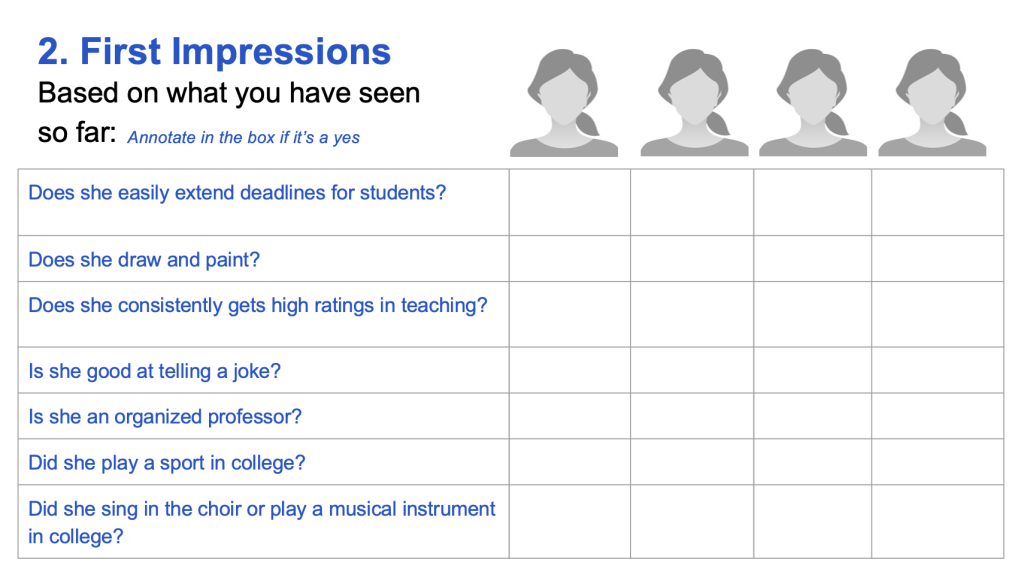
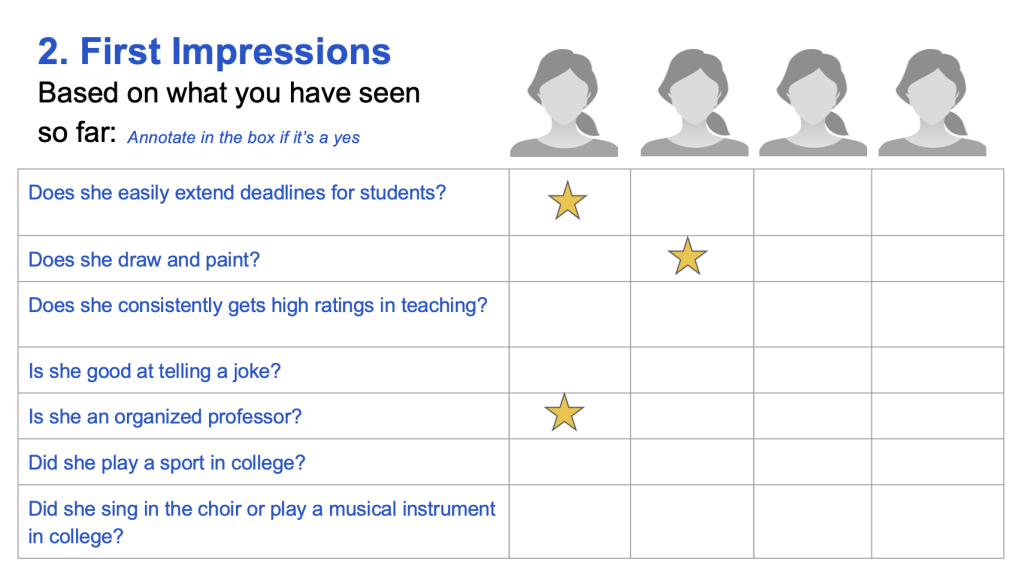
During the break, students will mark the “First Impressions Poster”.
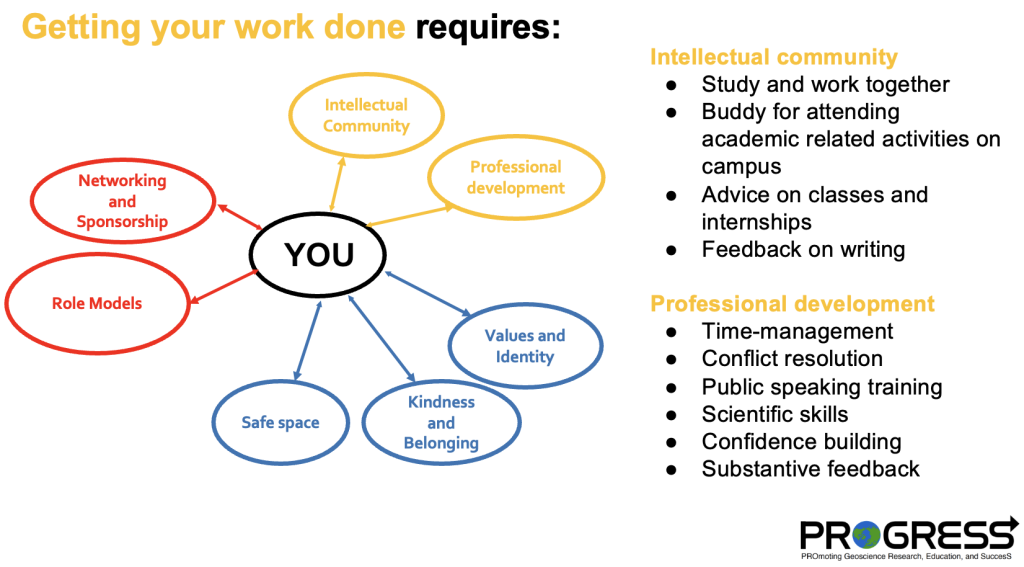
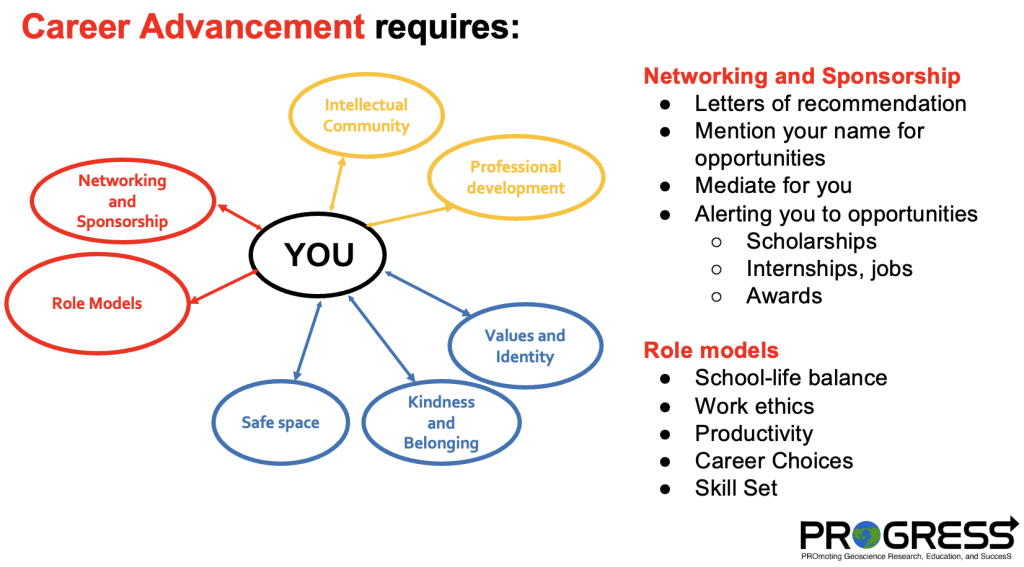
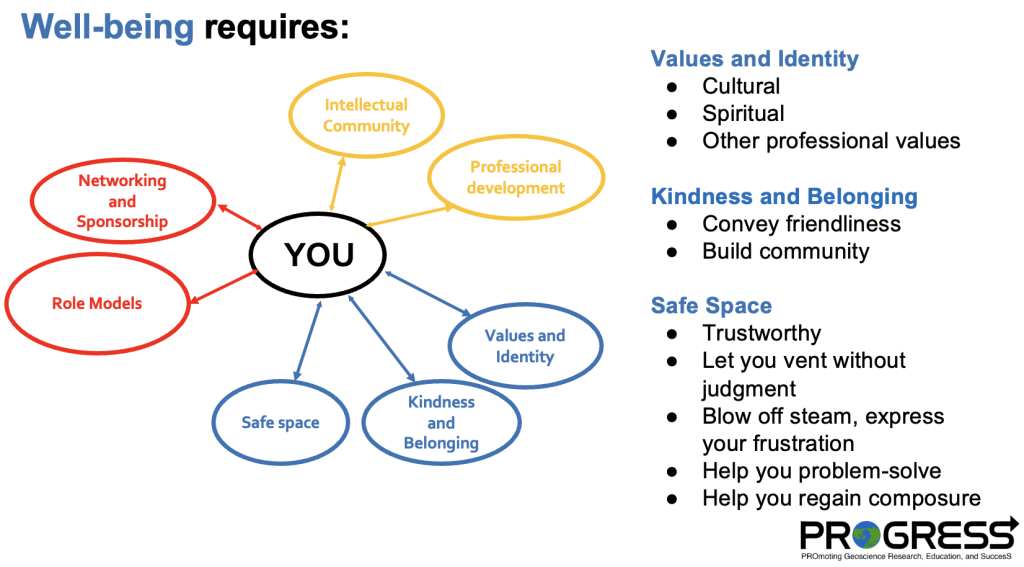
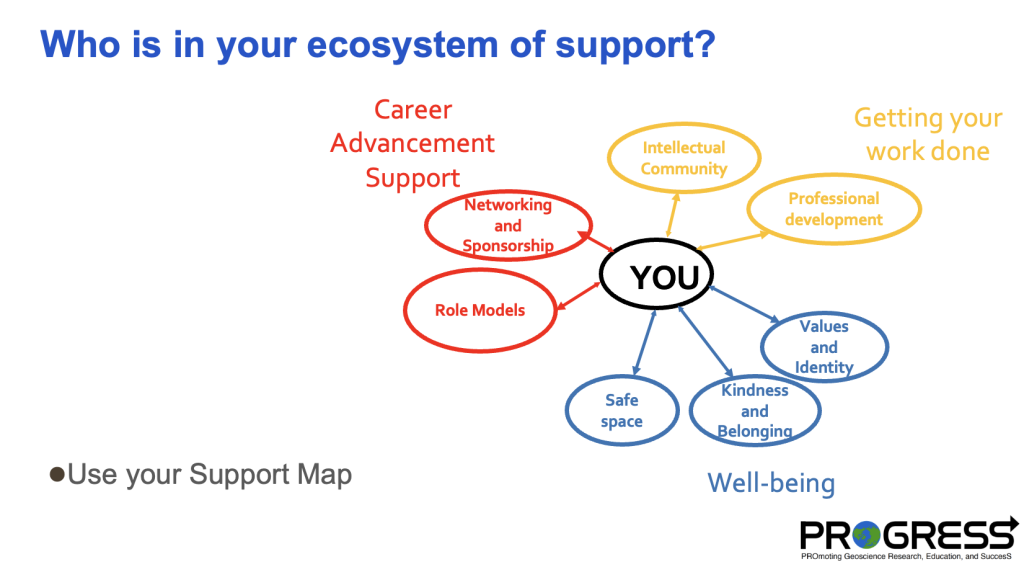
11:45 am - Support Map Exercise
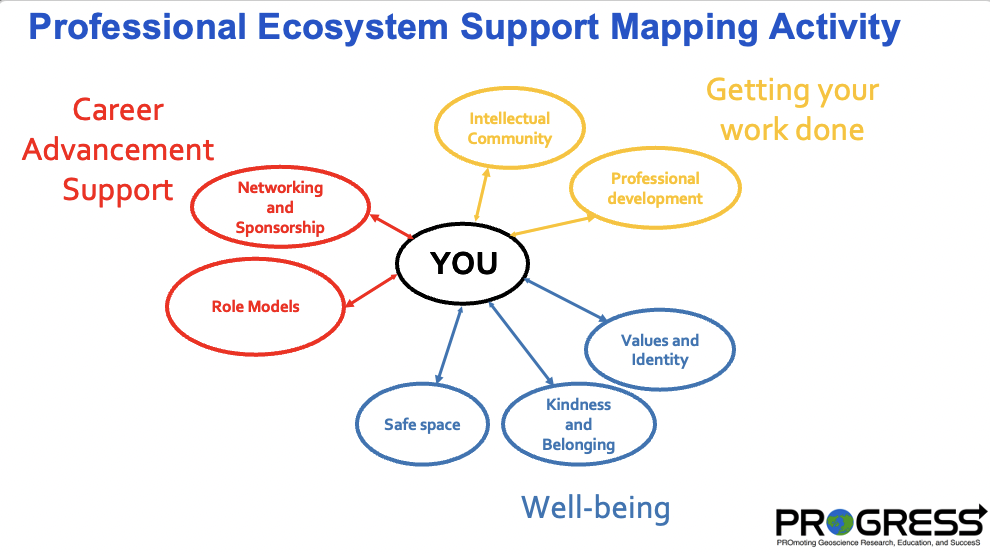
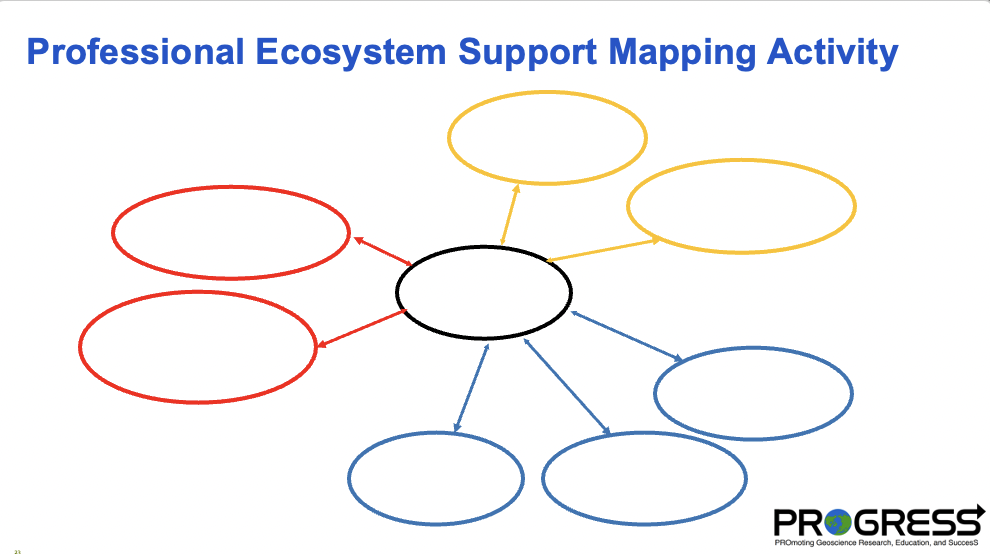
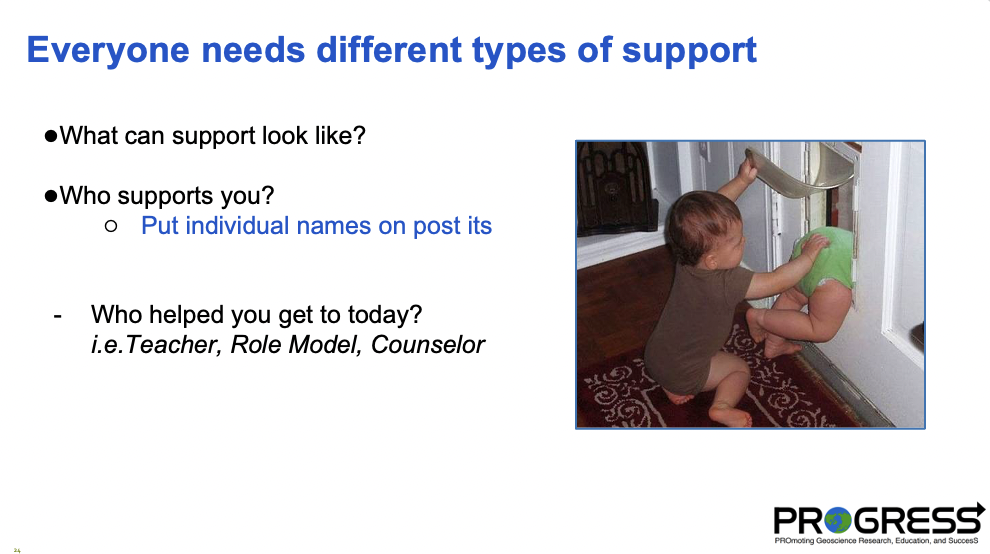
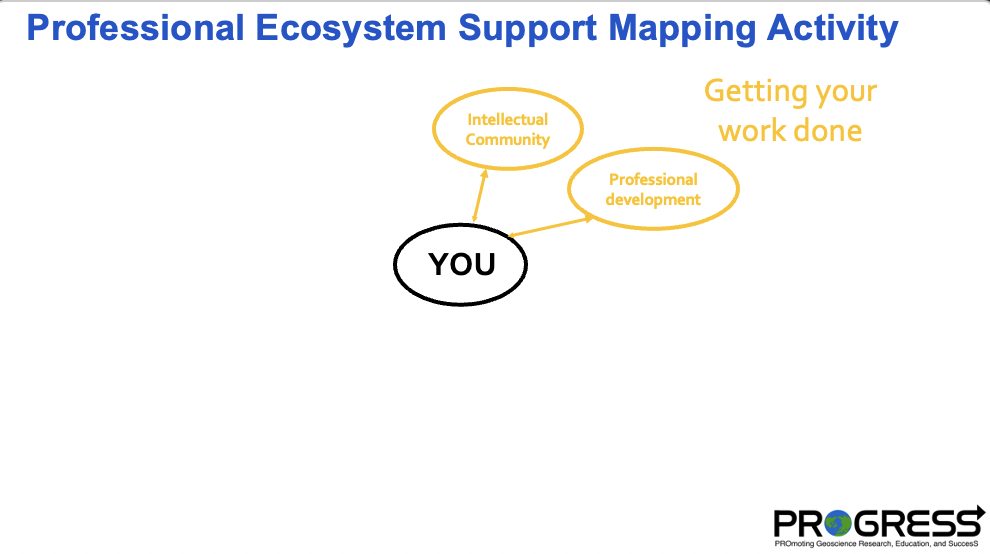
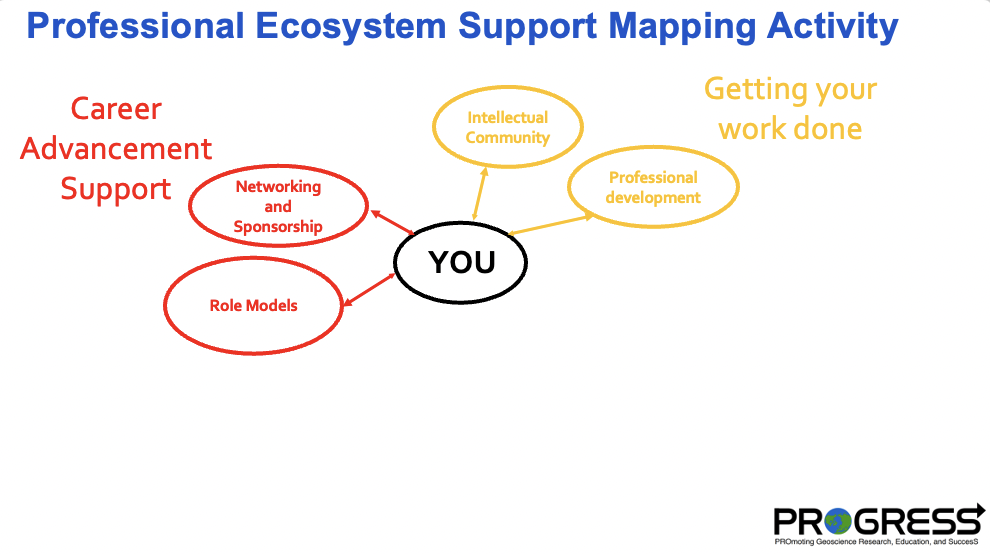
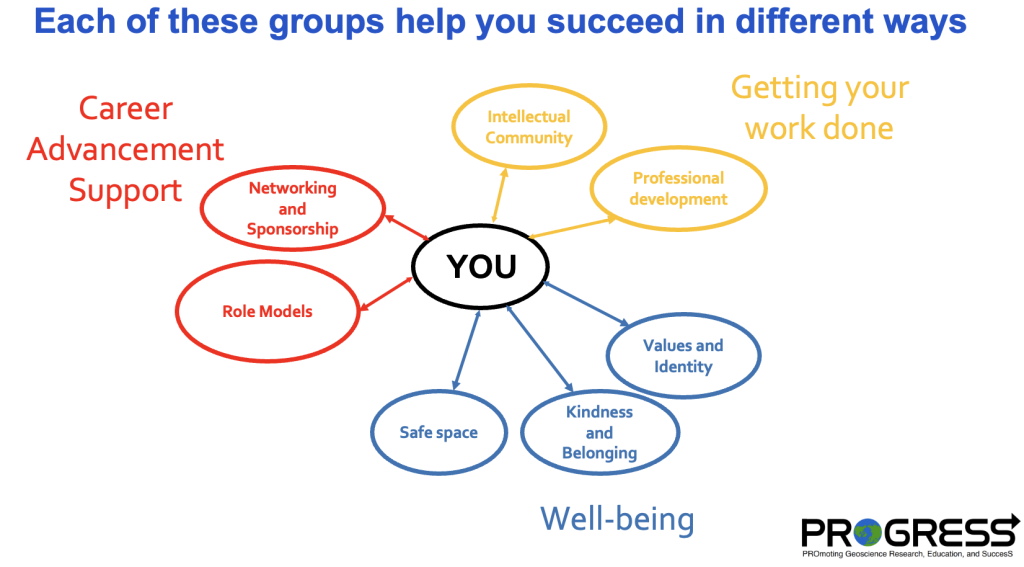
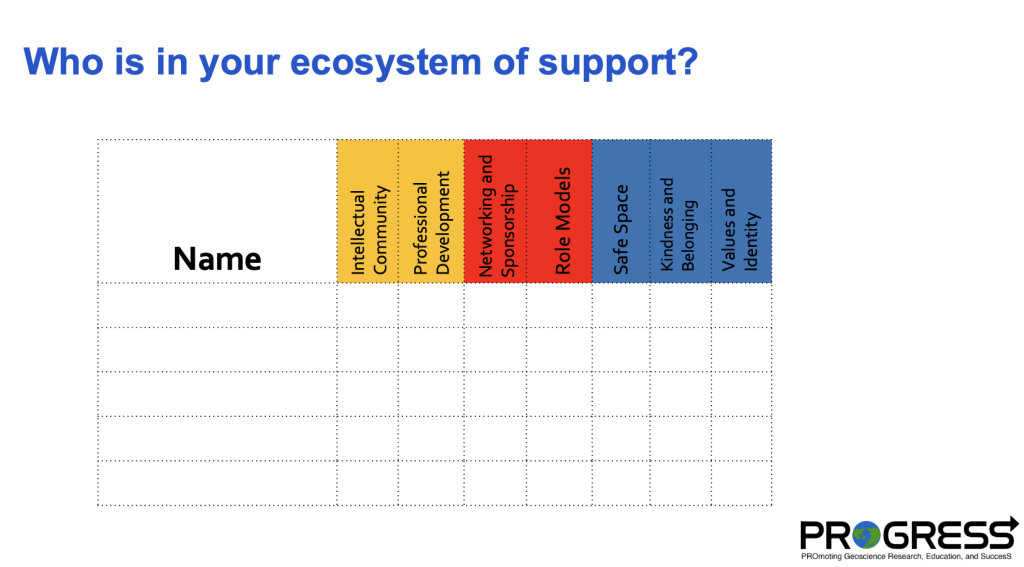
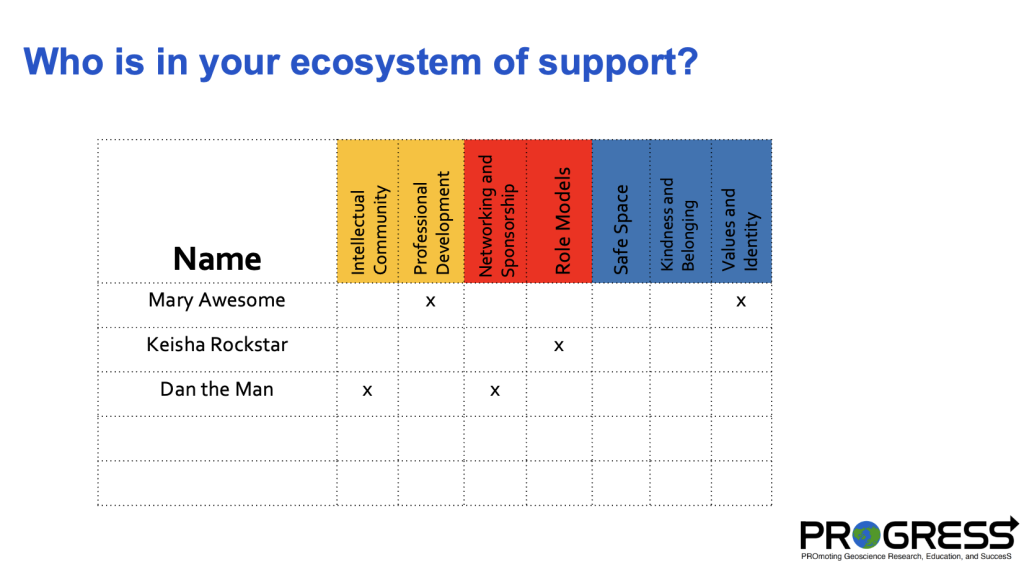
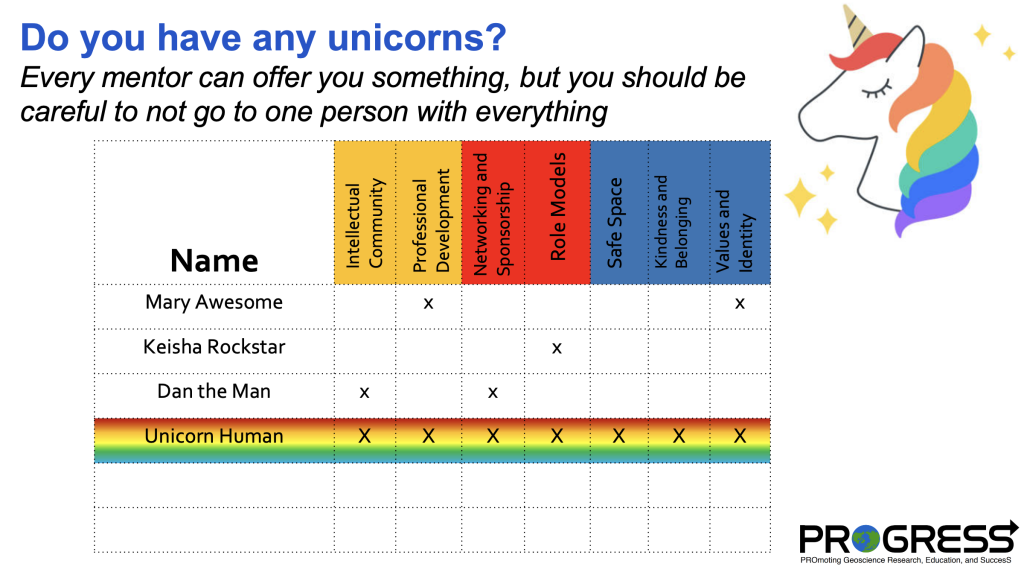
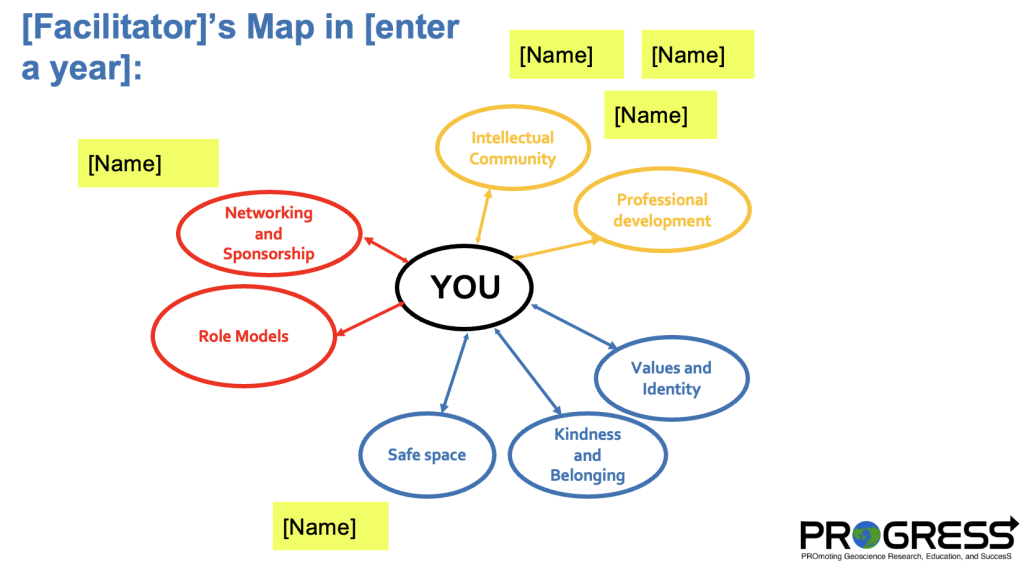
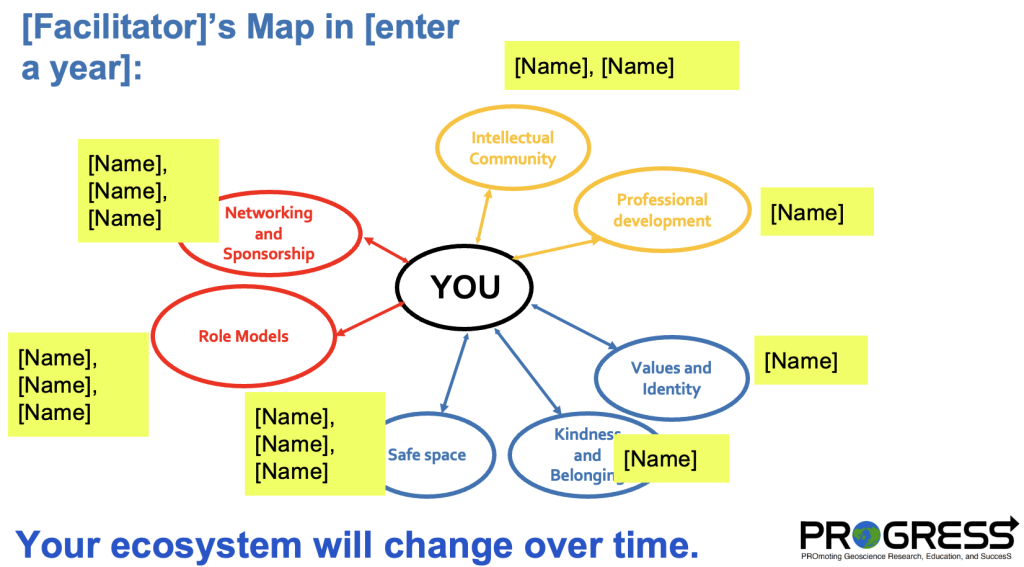
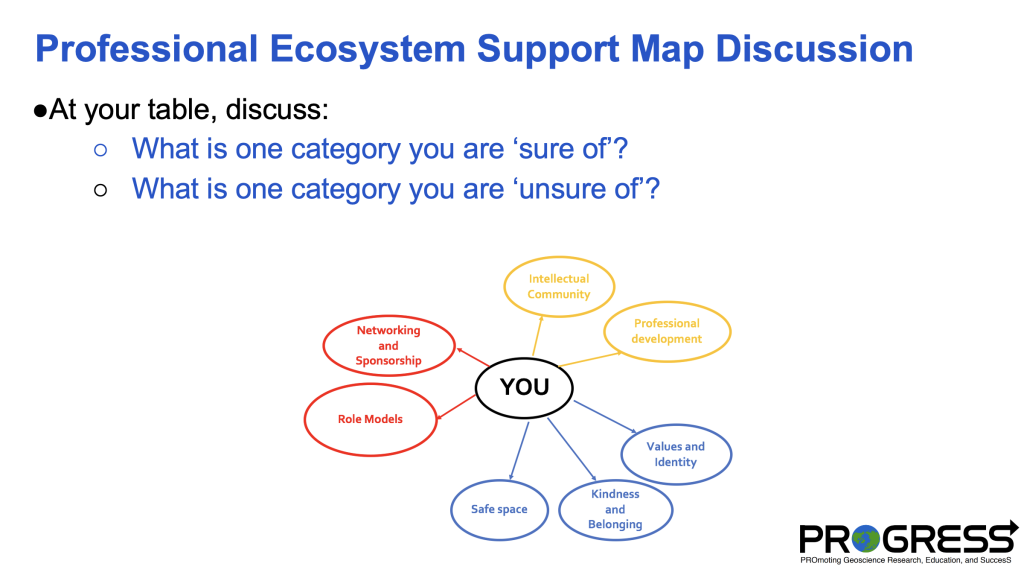
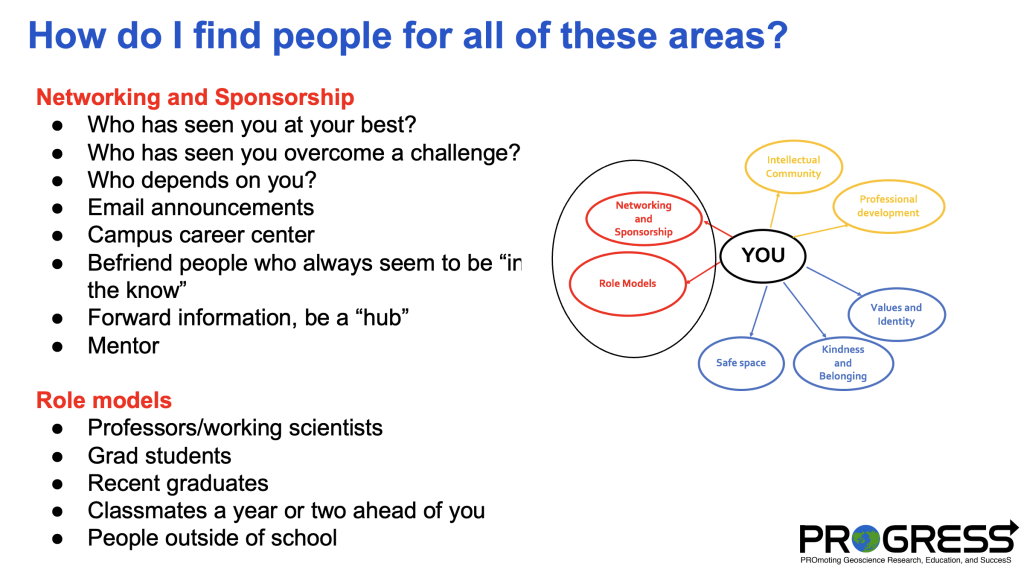
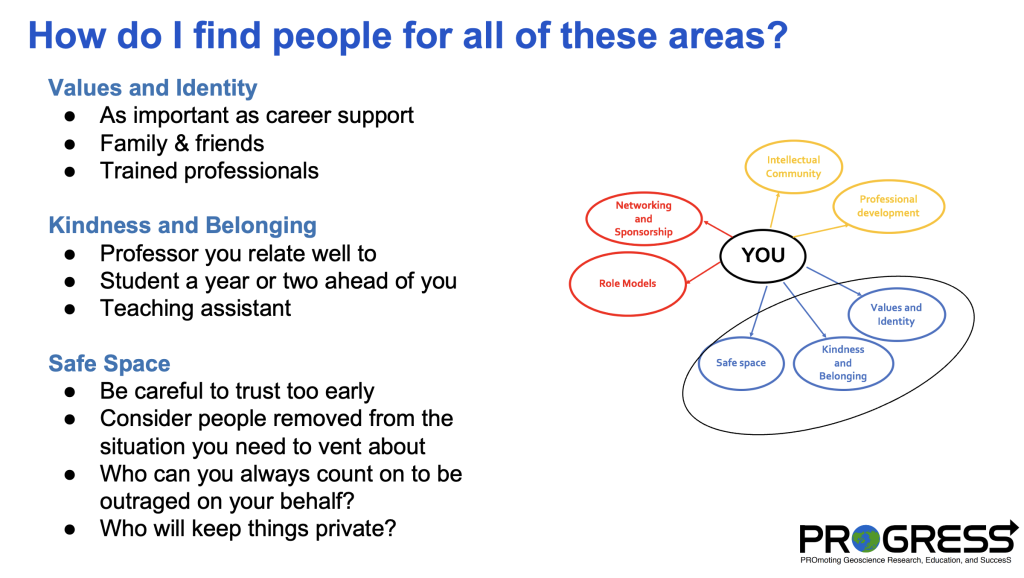
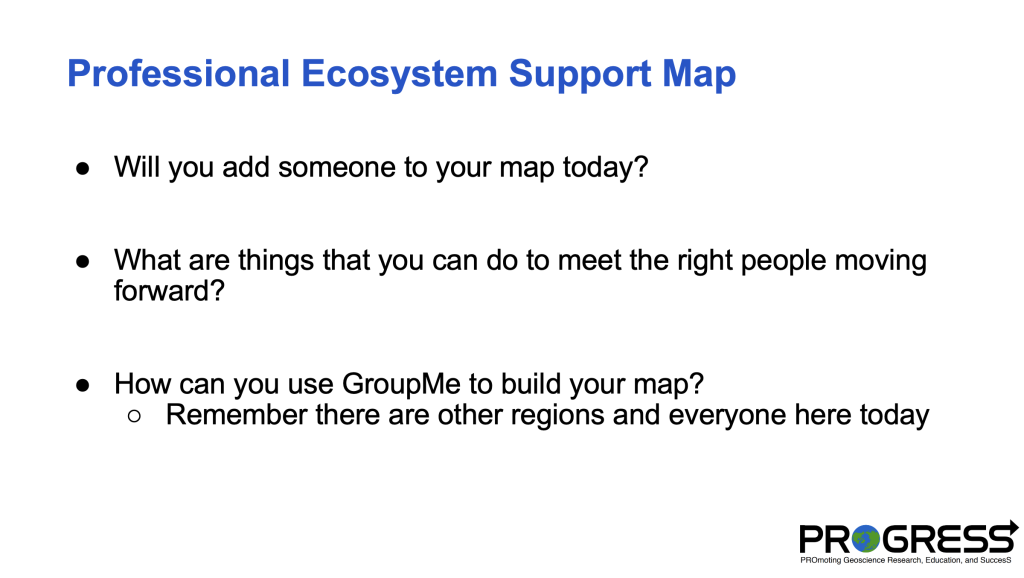
Mentorship Network Mapping
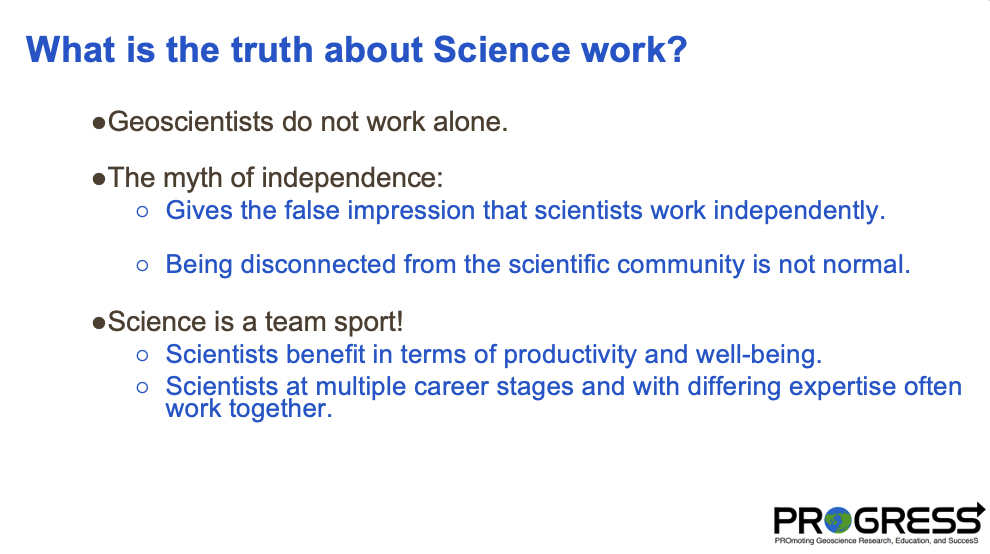
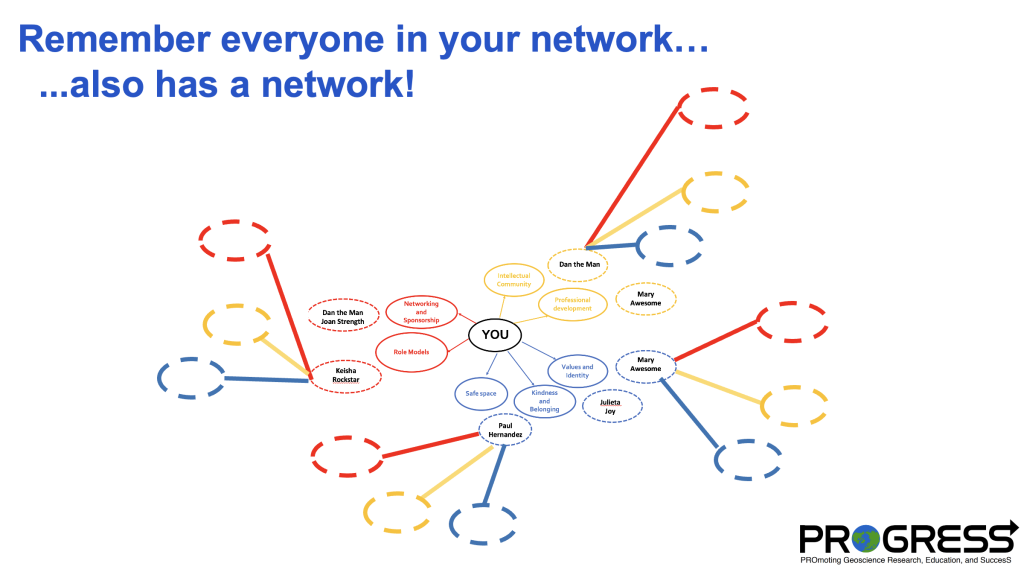
- Shift students’ view of mentorship from a single person to a broader network, helping them identify both existing support and gaps
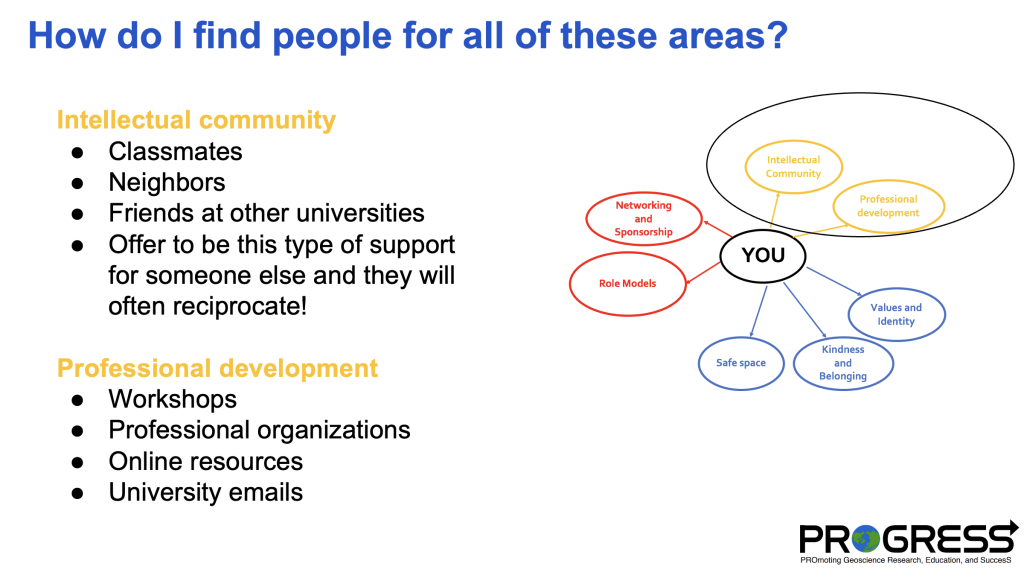
- Strategically plan to fill those gaps and build stronger, more diverse networks
- Growing support networks is linked to stronger science identity, better stress coping, and greater intent to persist in scientific careers
12:45 pm - Lunch
- Mentors discuss aspects of their career pathway thus far and the value of mentoring.
- Students are either seated at a table (in person) or put in a breakout room (virtual) with one of our volunteer mentors.
- This 30 minute lunch discussion is in a relaxed informal setting.
- The students will be able to move rooms in order to meet as many new faces as possible.
- This activity is another opportunity for exposure to career role models and a chance for students to grow their networks.
Remind students to fill out the ‘First Impressions’ poster & encourage them to get up and move around.
Take a group photo!
1:55 pm - Lunch Recap
2:00pm - Panel Discussion: What Mentoring Means to Me
Navigating Professional Mentoring Relationships
- Diverse women in Earth/Environmental Sciences careers share the benefits, challenges, and strategies of professional mentoring
- Role model stories inoculate students against negative stereotypes and inspire persistence through setbacks
- Women and students of color often seek same-gender or same-race mentors — exposure to diverse role models and open discussion helps students contextualize and navigate their own mentoring networks
3:00 pm - Break
3:05 pm - Growing Equitable Inclusion
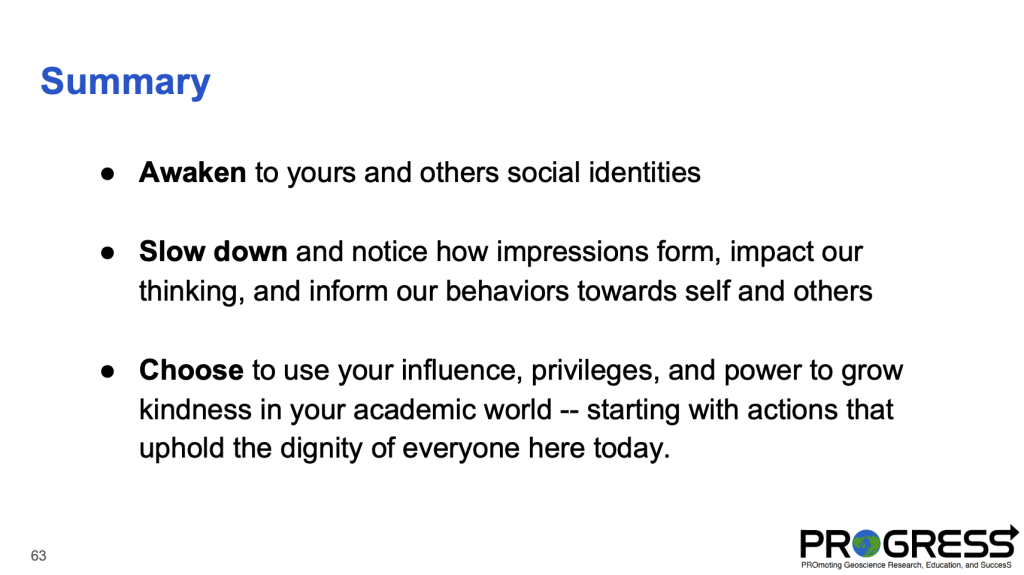
Fostering Inclusion & Kindness
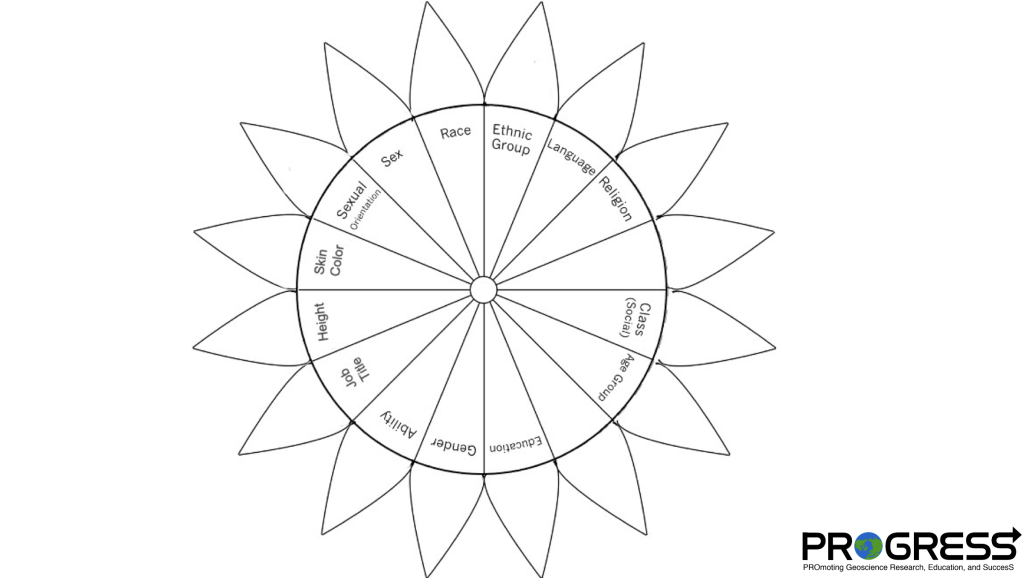
- Build awareness of social identities and how first impressions shape learning and belonging
- Slowing down automatic impression formation is a practical way to practice kindness and inclusion
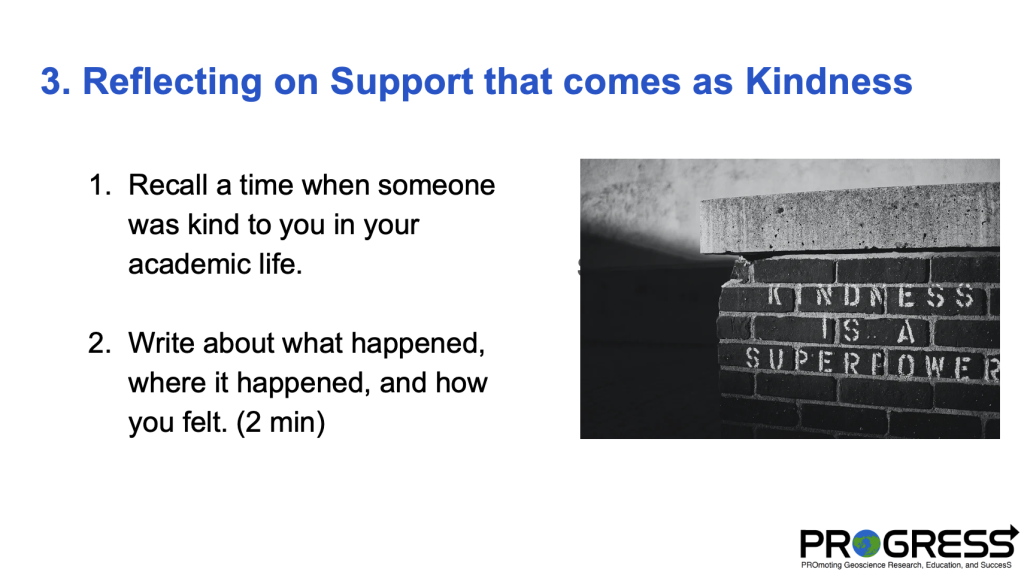
- Kindness meaningfully impacts classroom, mentorship, and research experiences (everyone, regardless of their position or power, can take inclusive action as an ally or co-conspirator)
- Those with greater power have greater impact when they act inclusively
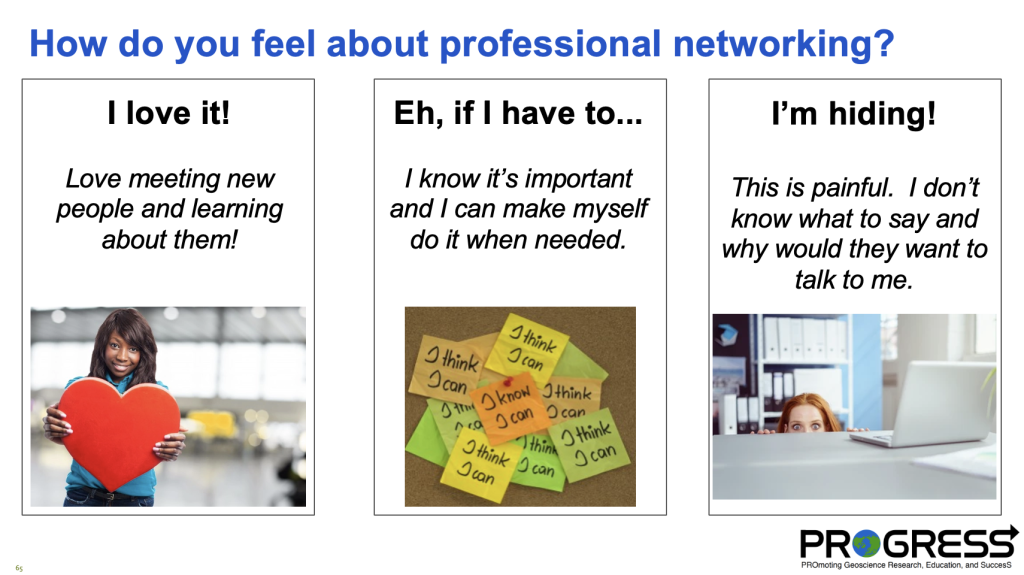
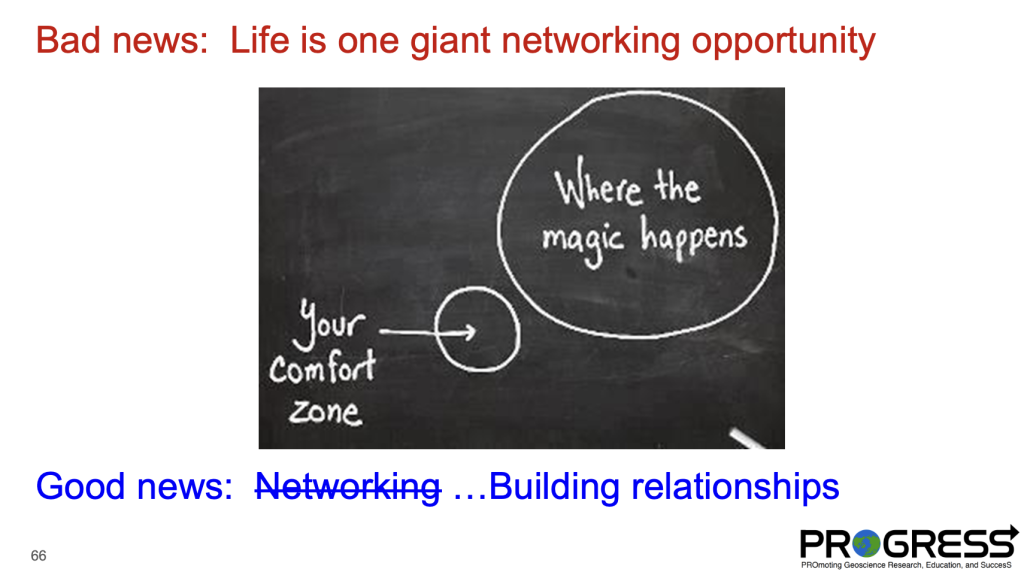
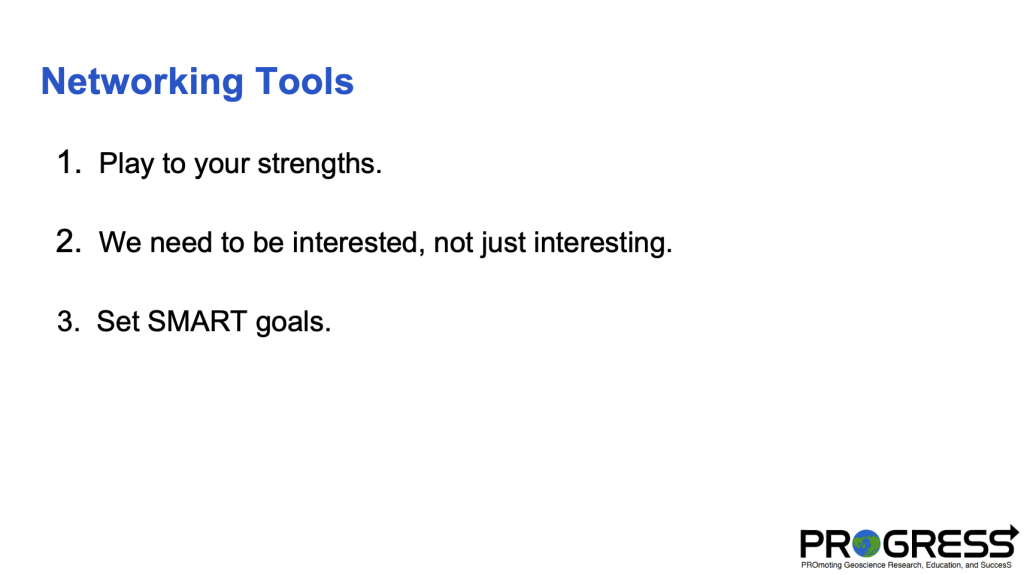
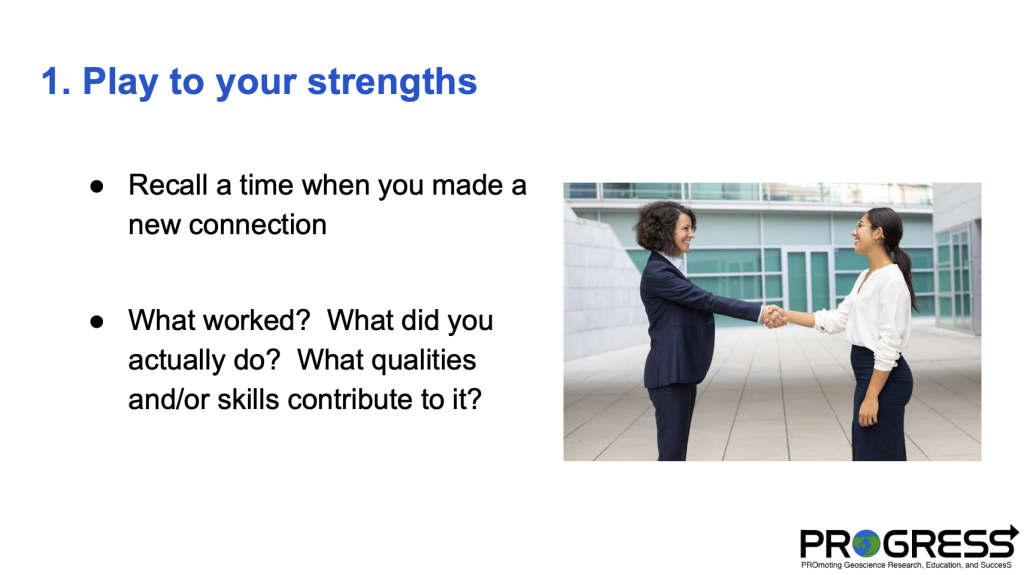
3:40 pm - Communication and Connection Toolkit
Building Mentorship Networks
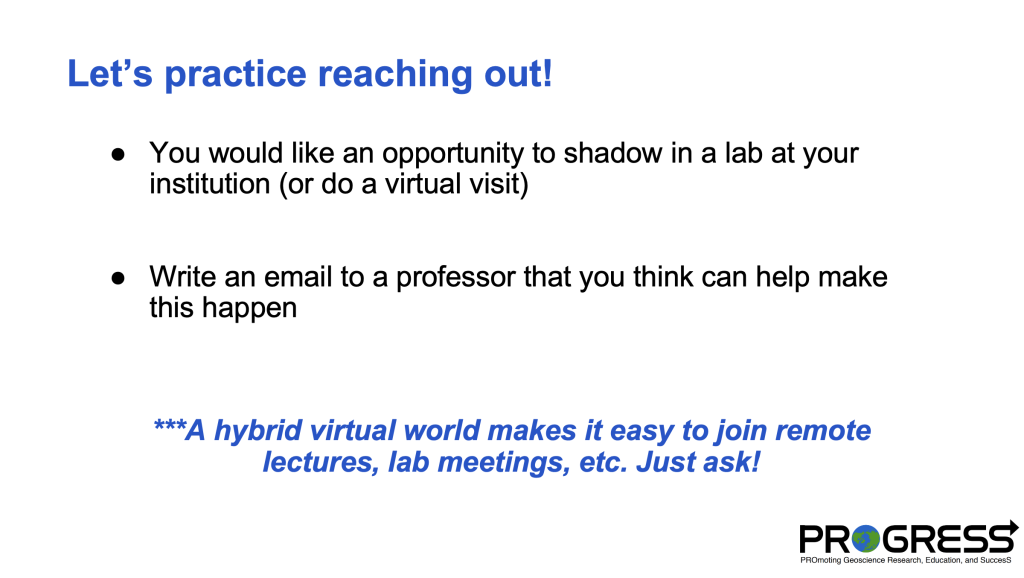
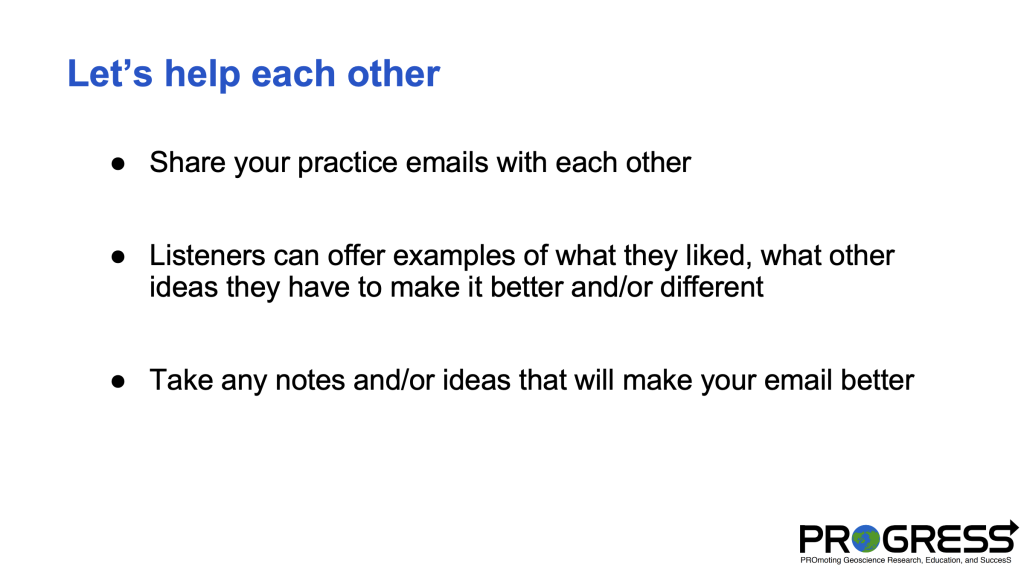
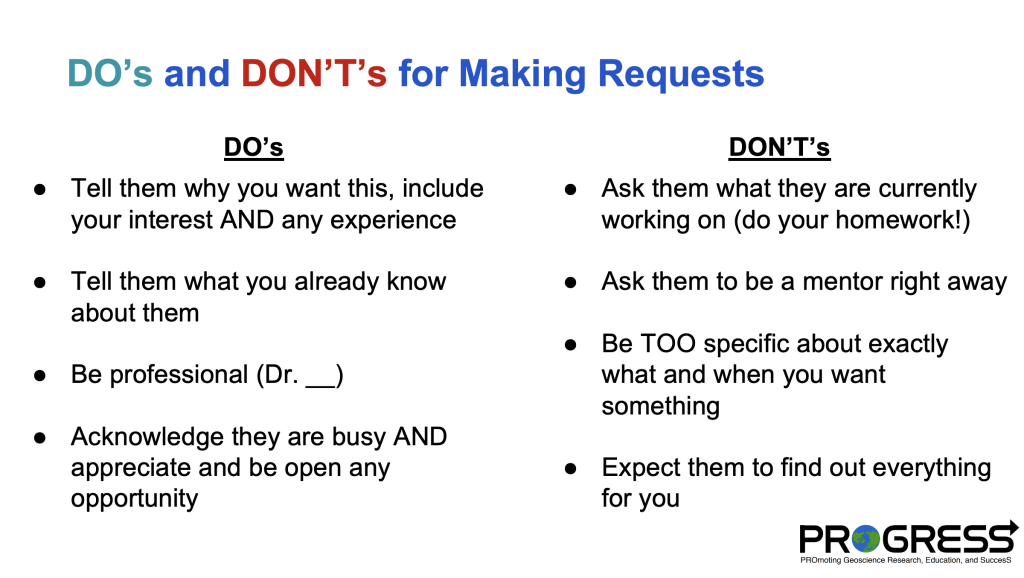
- Prepare students for the challenges of professional mentoring relationships with strategies and examples for effective communication and networking.
- Women typically enter college with small mentorship networks that grow slowly. Intentional, strategic networking accelerates this.
- Network strength, diversity, and size are linked to professional identity, motivation, and persistence in STEM careers.
4:10 pm - Concluding Remarks, Resources, Evaluation, Mentee-Mentor Connections
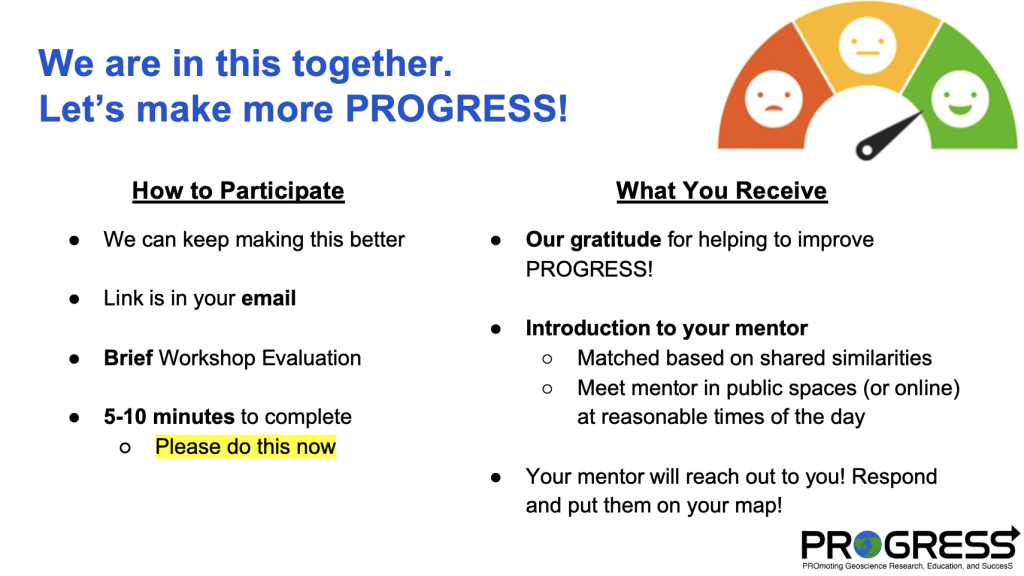
Mentor Matching & Expectations
- Match students with a local Earth/Environmental Science mentor using a “Birds of a Feather” approach: Pairing by discipline and shared personal preferences to accelerate rapport and social bonding.
- Psychological similarity between mentors and mentees strongly predicts relationship quality and can be established quickly through structured matching.
- Set clear, aligned expectations upfront: mentors initiate contact and pairs meet at least once per semester. Aligned expectations are linked to higher relationship satisfaction and better mentoring outcomes